Assessment Pathways
We offer two pathways for our diagnostic assessments.
Pathway 1 is a two-step option. It allows you to start with a lower upfront cost to explore whether a full diagnostic assessment is right for you, before committing to the full process.
Pathway 2 is a single, streamlined option. It includes both the psychometric questionnaires and the full diagnostic assessment in one step, with one payment upfront.
Same outcome. Different payment structure. Choose what works best for you.
Not sure which option suits you best? Try our Help Me Decide tool.
Help Me Decide

Unsure which pathway or service is right for you?
Pathway 1
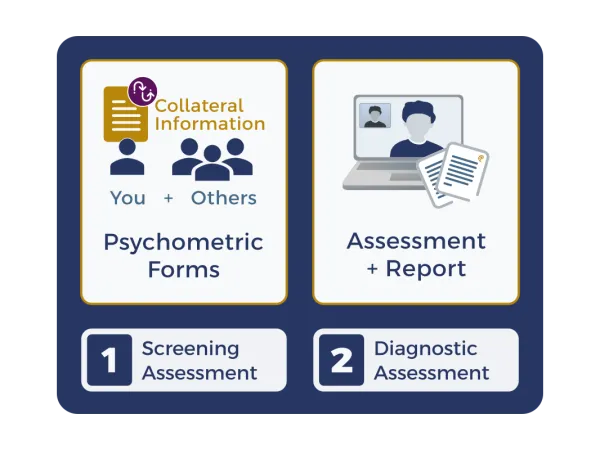
Pathway 1 is a two-step process
1. Screening
2. Diagnostic Assessment
This pathway allows you to start with a screening assessment to see whether a full diagnostic assessment is likely to be beneficial. You only pay for the screening to start with.
Then, depending on the results and our recommendations, you can decide whether to continue with a diagnostic assessment as the next step.
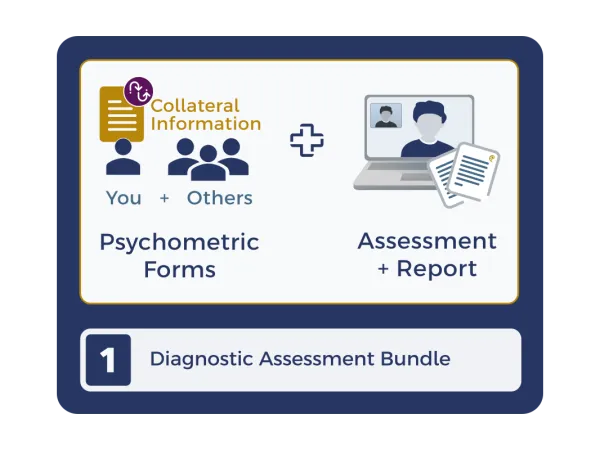

Assessment Process
1. Select Appropriate Pathway
2. Select Appropriate Service
ADHD / AUDHD Autism Diagnostic Clarification
3. Complete the Order
- Checkout Steps
An accurate diagnosis requires a thorough review of a person’s history and experiences, supported by structured assessment tools designed to aid the process.
During the checkout steps, you will be asked to fill in a form with your your personal details, as well as the names and contact details of people who know you well, both now and as a child. This is referred to as collateral information and is required to proceed with our services
4. Psychometric Forms
- Collateral Information
You and your nominees will be asked to complete some psychometric forms prior to your appointment.
Why do we collect Collateral Information?
To ensure all diagnostic criteria are met, collateral support of both current and childhood symptoms is required.
The information from collateral sources is typically gathered using questionnaires that will be sent directly to the nominated person(s).
Current Symptoms
- Collateral information about your current symptoms can be provided by anyone who knows you well now.
Childhood Symptoms
- Collateral information about childhood symptoms can come from:
- Caregivers
- Parents
- Siblings
- Extended family or
- Anyone who knew you well enough to report on your symptoms during childhood (before age 12 years).
- School reports can also be helpful in documenting childhood symptoms and difficulties.
The presence of childhood symptoms is part of the diagnostic criteria for ADHD.
If you are unable to find a person to complete the childhood questionnaire form that we use for these assessments, you can provide school reports that document the presence of childhood difficulties that might indicate the existence of ADHD symptoms.
If this is also not possible, we may be able to proceed with the diagnostic assessment, but there is a risk that we would not be able to confirm a diagnosis without more information about your childhood difficulties.- Pathway 1: Review of Screening Assessment
Once all the psychometric forms have been completed, a registered psychologist will review the responses. You will receive feedback on whether it’s appropriate to continue with a formal diagnostic assessment.
If a diagnostic assessment is recommended, we will send you a link to purchase a diagnostic assessment from Pathway 1.
Image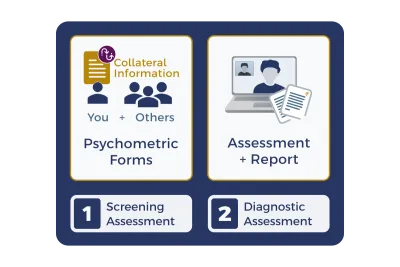
- Pathway 2: Review of Psychometric Forms
Once all the psychometric forms have been completed, the information submitted will be reviewed by your assessor.
They will discuss the results with you during your appointment.
Image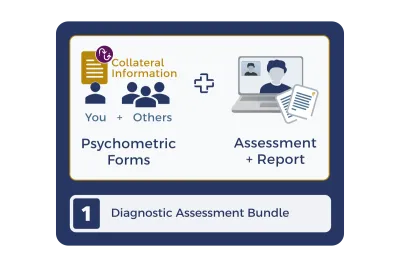
5. Diagnostic Assessment
- Pathway 1: Appointment
We can offer appointments within 1-2 weeks after the psychometric forms have been completed and reviewed.
The online appointment, which usually takes about an hour, is used to follow up on responses from the completed forms and to gather additional information about the person's history and any other potential causes of the person's difficulties, including other mental health conditions.
- Pathway 2: Appointment
Clients are able to schedule their appointments at least two weeks in advance to allow enough time to complete the required psychometric forms before your session.
The online appointment, which usually takes about an hour, is used to follow up on responses from the completed forms and to gather additional information about the person's history and any other potential causes of the person's difficulties, including other mental health conditions.
- Diagnosis
Mental health professionals use a combination of observed, reported, and self-reported symptoms to make an accurate diagnosis. This comprehensive approach helps ensure that the diagnosis considers not only the individual's own experiences but also how their condition appears to others and shows up in their daily life.
- Diagnostic Report
After the assessment is completed, a written report will be provided that will summarize all relevant information and will include appropriate diagnoses and treatment recommendations.
We aim to have the report ready within 10 business days of the assessment and you will receive a notification via email once it is available.
- Prescriptions & Medication
Our nurse practitioner can prescribe stimulant medication where clinically appropriate.
We can refer you back to your doctor to manage your prescriptions medication if preferred.